
Early detection prevents difficulties that have not been detected and that can be resolved in the early grades of primary school with hardly any after-effects, from being dragged into later stages of education with their negative consequences in terms of school failure and low self-esteem of children and adolescents.
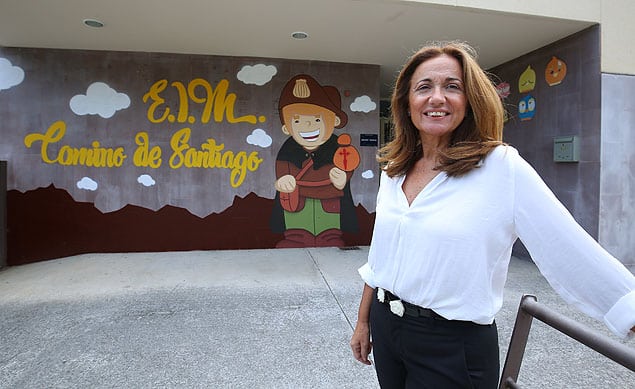
The two preschools managed by the Ponferrada City Council, Mago Chalupa and Camino de Santiago, are committed to inclusive education by implementing dide, an innovative screening method capable of identifying and detecting signs of up to 35 learning and development difficulties in children between 2 and 18 years of age, thus promoting inclusive education.
The questionnaires on which the díde method is based seek to identify difficulties in areas such as writing, calculation, reading, or memory, but they are also capable of detecting problems related to hearing, vision, and psychomotor skills, as well as with the behavior, self-esteem, or mood of the little ones. In addition, the method can detect other particular situations such as bullying or high abilities. See all indicators
The main novelty that dide brings to the world of diagnostics is that the results on aptitudes and behaviors are obtained without subjecting the child to tests or questionnaires.
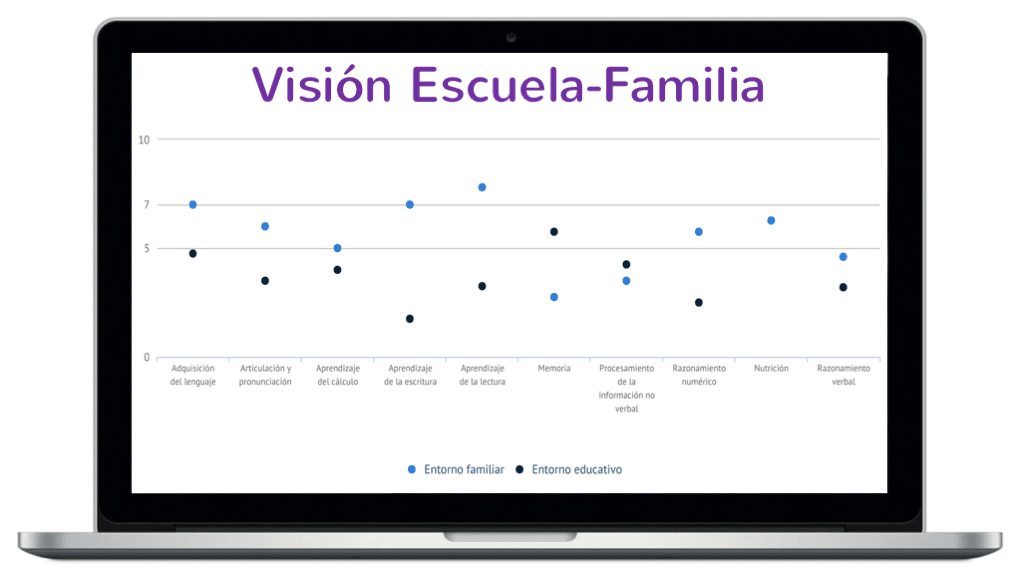
díde is based on the observation method. Those who know the children best: their teachers and their parents, are the ones who answer the digital questionnaires
The information provided by dide facilitates diagnosis by specialists, also taking into account comorbidities. The system helps to rule out some problems and points out others that need a “deeper diagnosis” by a specialist.
The time saving for the educational counselor due to the fact that tests do not have to be carried out on problems already ruled out by dide is considerable.
Preschools in Ponferrada and inclusive education
For her part, the educational psychologist and person in charge of the implementation of dide in the preschools of Ponferrada, Delia Fernández Luna, considers that the method is “a fantastic tool for counselors, families, and schools.” “Until now, the only way to screen children was to apply tests to them, the good thing about dide is that the children do not intervene,” reiterates Fernández, who is in charge of coordinating the arrival of the platform in Castilla y León.
Under her supervision as a counselor, the teachers of the centers of the capital of El Bierzo and the families of the students are already answering the questionnaires. “The parents already have the invitations and are filling out the end-of-year surveys, they have given us a spectacular response and we already have more than 80 families,” says the person in charge of the project, who values that “the system forces families to participate, to worry about knowing their child more.”
The early detection of problems that hinder the learning and development of children facilitates the task for families and teachers before entering primary education. Many traits can be seen very early, for others it is necessary to wait, but prevention is always valuable
In that sense, one of the important parts of the project has to do with the “close and human treatment” with which the counselor interprets the report that results from the questionnaires. After validating these results, the person in charge convenes a meeting in which he offers guidelines for behavior with respect to the child to both parents and teachers and recommends that the family refer the child to a specialist to carry out a deeper diagnosis if any “deficient aspect” is observed.
In addition, Fernández recalls that the system also helps when identifying “comorbidities”, that is, problems in reading, comprehension, or any other aspect, linked to the presence of another disorder such as ADHD. In this regard, the educational psychologist emphasizes that the association that groups those affected by this disorder in El Bierzo, Adahbi, has this platform that helps to locate “equally limiting problems” for these children.
Early Detection of High Abilities
On the other hand, the Councilor for Social Welfare of Ponferrada, Pedro Muñoz, considers that the “early detection program” is a “fundamental benefit” that will not only allow identifying students with special educational needs before the schooling stage but will also allow detecting predisposition to high abilities.
Muñoz, who boasts of having in Ponferrada “the best preschools in the world”, emphasizes that the “preventive action” and the “involvement of families” are the two main reasons that convinced those responsible for the area to implement this pioneering project.
Sometimes, when we realize this or that problem of the kid, it is already late. With the final report, the children leave the preschool to the primary school, where the teachers find part of the work done
Full news in:


How can I implement the díde method in my educational center?