
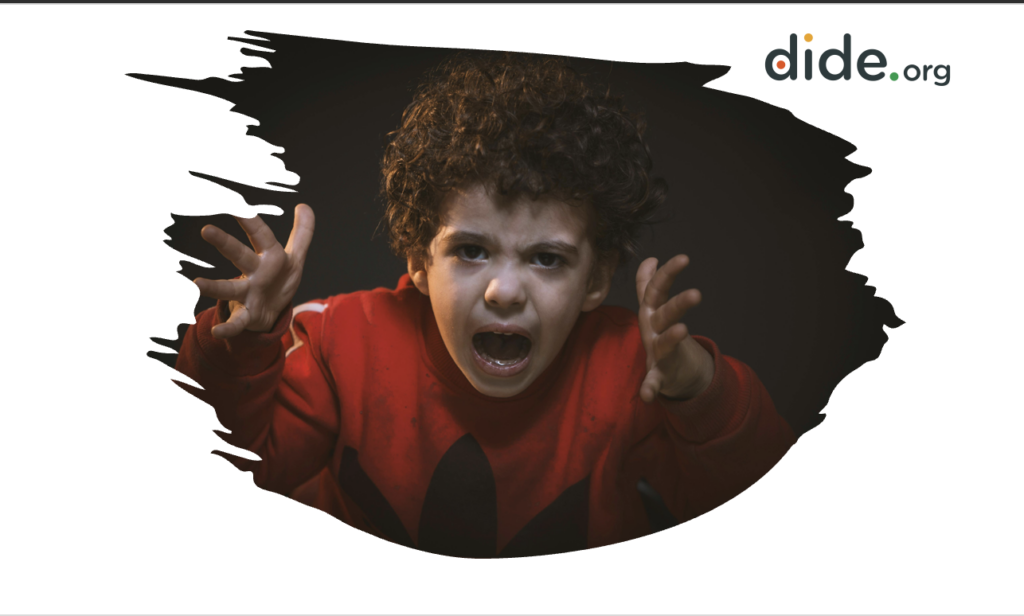
In the world of education, we encounter challenges that affect children’s learning and development. One of these is Oppositional Defiant Disorder (ODD), a behavioral disorder characterized by persistent patterns of anger, hostility, and disobedience. ODD maintains a constant pattern of negativistic, defiant, and hostile behavior, primarily directed towards authority figures. It affects children and adolescents and can have significant consequences if not addressed appropriately.
| For the child | For the family |
| Problems in social and emotional development: Difficulties forming and maintaining friendships, low self-esteem, social isolation, increased risk of depression and anxiety. Academic problems: Difficulty following instructions, concentration problems, poor school performance, increased risk of dropping out of school. Behavioral problems: Aggressive, impulsive, and defiant behaviors, increased risk of involvement in criminal activities or substance abuse. | Increased stress and family tension: Frequent conflicts, communication difficulties, feelings of helplessness and frustration. Problems in family dynamics: Difficulties establishing clear boundaries and rules, strained relationships between parents and children, siblings, and other family members. Difficulties in social life: Social isolation, rejection by other families, difficulty participating in social activities. |
Internationally, ODD affects between 2% and 6% of school-age children. In Spain, statistics point to a similar prevalence, with 3.4% of children between 5 and 17 years old diagnosed with ODD.
An untreated oppositional defiant disorder in childhood can worsen into a conduct disorder (dissocial). Oppositional defiant disorder, unlike conduct disorder, usually begins in childhood and is rarely diagnosed after adolescence. Early detection and accurate diagnosis are necessary to avoid confusion in cases of children with ADHD and ASD.
How to detect and identify it?
The signs of ODD can be confused or interpreted as a child with a bad and difficult character, but it is important for families and educators to be attentive in order to identify them in time. Some of the most common indicators include:
- Oppositional and defiant behavior: Frequent arguments with adults, refusal to follow rules, spiteful and vindictive behavior.
- Anger and irritability: Frequent tantrums in younger children and tremendous anger in older children, difficulty controlling temper, intense emotional responses to everyday situations.
- Annoying behavior: Tendency to deliberately annoy or irritate others, blaming others for their mistakes.
- Disruptive behaviors: They lie frequently and have manifestations that can be aggressive.
These symptoms must persist for at least six months and affect interaction with authority figures.
Differentiating ODD from Tantrums and Conduct Disorder
While tantrums and ODD share some characteristics, such as anger, frustration, and disobedience, there are differences in duration and intensity that allow them to be distinguished:
• Tantrums: These are brief and explosive episodes, generally lasting less than 20 minutes. The intensity of the emotion can be high, but it usually decreases quickly.
• ODD: The negative behavior is persistent and lasting, present in different contexts and for a prolonged period (more than 6 months). The emotional intensity can be variable, but it is not always extreme.
CD has in common with ODD the challenge to authority, episodes of anger, lies, blaming others, the lack of assumption of one’s own responsibility, but there are fundamental characteristics that distinguish CD, which are a serious breach of the rules such as spending the night outside, truancy… Fights or threats to others, physical cruelty to people or animals. Destruction of property and/or theft. It is important to note that the minor with ODD suffers and does have the perception that he/she is not behaving appropriately and as if he/she cannot or it costs him/her a tremendous effort to contain his/her rage, his/her senseless justifications and his/her lies.
How can we help minors?
- Establish Goals in Advance: Set progressive goals for tasks they refuse to perform. Reward achievements with appropriate rewards.
- Verbalize What Will Happen: Telling them what is going to happen at each moment helps to structure their routine and reduces resistance.
- Empathize with Them: Understanding their emotions and difficulties can facilitate communication.
- Speak Positively: Focus on what they are expected to do instead of what they should not do.
- Verbally Reinforce Good Deeds: Praise their achievements and positive efforts.
- Give Options: Allow them to make decisions within reasonable limits.
- Be Consistent: Keep our word and establish routines with visual aids.
- Freedom to Play: Allow them to play whatever they want within what is safe.
- Avoid Talking about Their Behavior in Their Presence: Do not focus attention on their negativism.
The consequences of ODD are not inevitable. If identified and addressed in time, with appropriate interventions, children with ODD can learn to manage their emotions and behaviors, develop healthy relationships, and reach their full potential. It is important for parents, educators, and health professionals to be alert to the warning signs and seek help if needed. We encourage you to listen to our Doctor of Psychology, Nuria Ros, on La Tarde con Marina to expand the information on the subject. At Dide.org we are experts in detecting educational, emotional and behavioral potential and difficulties early in order to intervene. You can access the diagnostic tool in this link.
