
APOCLAM and the future of guidance in Spain
The Professional Association of Counselors in Castilla La Mancha, APOCLAM, is made up of 300 counselors who, freely and independently, organize themselves to try to solve the problems of guidance professionals and so that their criteria, given the current educational landscape of reforms and counter-reforms, can be heard.
Among other purposes, APOCLAM seeks to promote guidance in all its forms within the educational and training field and to contribute to the continuous training of its members through the organization of congresses, courses, seminars, conferences, etc., to achieve the objective of quality education for all.
There is a clear need:
- A large percentage of students who drop out of the educational system do so due to learning problems, development issues, or social and educational needs that have not been taken into account.
- The educational counselors need to definitively overcome, with the help of new technologies, the traditional “loneliness” and isolation they suffer; they need tools to help them speed up the process of evaluating children and prevent the diagnosis from being delayed in order to offer them individualized attention focused on their strengths and potential.
- Teachers demand information and training on the difficulties that their students may present
- Parents want to know what educational needs their children have and that they are addressed in the best possible way to guarantee academic success and well-being.
It is clear that with the ratio that counselors manage in schools, it is impossible to meet all the specific needs, much less detect and prevent them early on; even teachers stop referring visible cases because they are aware of the lack of resources, “Cases escape us.”
Several authors agree that the educational guidance models of the 21st century should facilitate the capacity for interaction and communication between educational agents and other members of the educational community, including families. Therefore, the need to recognize the importance of ICT as tools that help promote contexts and new spaces that create synergies to communicate, create, and manage knowledge is clear.
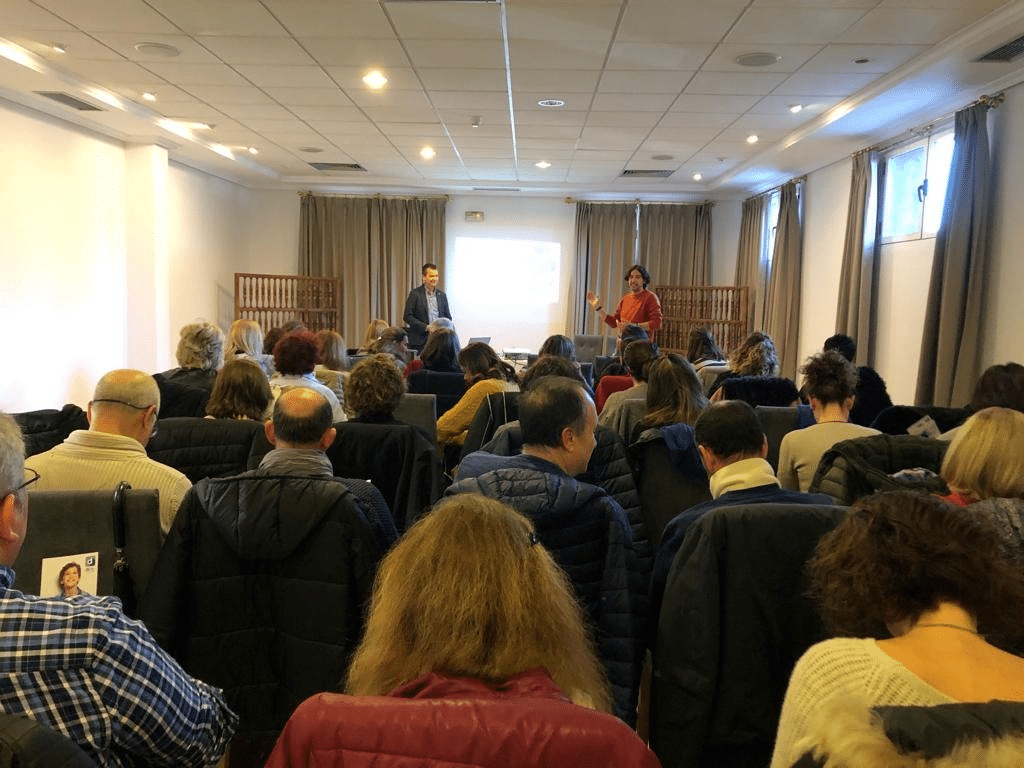
Presentation of DÍDE at the XVIII APOCLAM assembly
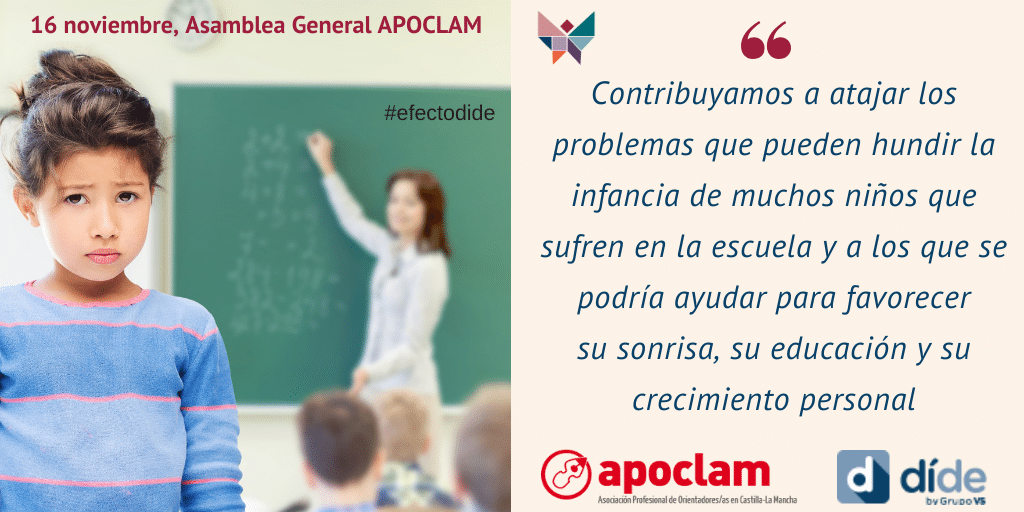
On November 16, 2019, the XVIII assembly of APOCLAM was held at the Abacería hotel in Toledo, to which we were invited to present Díde to the members and how to get the most out of this online guidance methodology that is revolutionizing the world of early detection of educational needs and guidance.
Alberto Ramírez, director of the project, was in charge of the presentation and clarified the doubts of the counselors present. “To innovate in a sector, it is necessary to come from another to do different things” – Alberto Ramírez, specialist in new technologies applied to education and author of the original idea that led to the creation of Dide, pointed out.
The method, created by specialists in education, psychology, and new technologies, is extremely simple, without the intervention of the minor, done with the observation of the adults closest to the minor, whether from the family, school, or social environment. It does not make diagnoses, the exclusive competence of professionals, whether medical pediatricians, neuropediatricians, psychologists, educational psychologists, speech therapists… but it does emerge the outline of an accurate portrait that marks the need or not to refer to a subsequent specific exploration by the appropriate and adequate specialist.
As is well known, once you know what is happening to the minor, you can do the intervention that is required for their greater well-being. With díde we can detect “seed” difficulties of further problems that begin with the loss of confidence in themselves due to perhaps very tight results achieved with much effort. It cannot be expected that all children are the same, nor that they understand concepts at the same time, nor that they have the same abilities; they are all different and they all have different intelligences.

Where to start? Obviously, by knowing the child’s needs
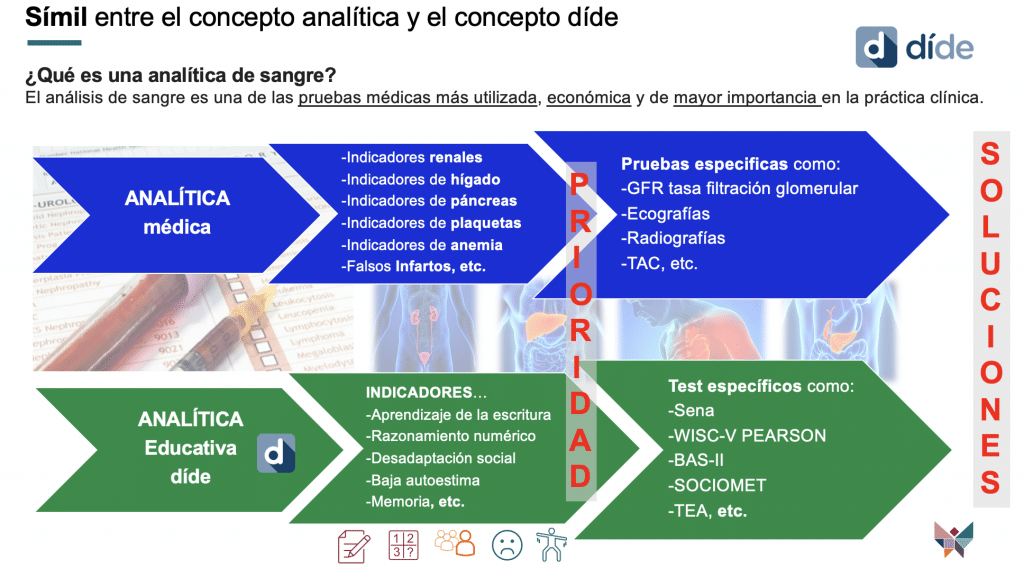
In the same way that in healthcare with a blood test we can see the indicators to pay attention to. In education, we can also use díde to obtain the indicators through the observation of the people who know the child best. Dide is located at the starting point, KNOW to then be able to do.
Important to bet on an education that educates minors attending to their different capacities
An important aspect in the causes of school failure is the little or no communication between the family and the school, with the díde system, contact is easily and discreetly established between the two areas, and if necessary, also the health area. Díde also simplifies the monitoring and evolution of minors.
As specialists from different fields well know, innovations in prevention, and that also work as is the case of early detection with díde, may generate fear since after knowing, acting is requested, but the human cost both personally and socially of not doing so is devastating and immense, which far exceeds the figures of preventing.
APOCLAM offered each member, in addition to 2 uses of the Díde application (to use with 2 students) many more benefits. Find out at the association. info@apoclam.org
www.dide.app
Thank you for your welcome!!
PROGRAM

9:30 AM – Reception of attendees.
Accreditation and delivery of documentation.
10:00 AM – Opening of the General Assembly.
Opening of the General Assembly by the President.
Reading and approval of the agenda and the previous minutes.
Reading and approval of the Management Report 2018-19.
Reading and approval of the Secretary and Treasury Report 2018-19.
10:40 AM – Constitution of the electoral table.
Presentation of candidacies for the election of the Board of Directors.
Voting.
Counting and proclamation of the new Board of Directors.
11:15 AM – Presentation and approval of the work plan and budget 2019-20.
11:30 AM – Orienta-T 2018 awards ceremony.
11:45 AM – Tribute to retired members.
12:00 PM – Questions and answers.
12:15 PM – Break.
12:45 PM – Presentation of Díde by Alberto Ramírez, director of the project.
2:15 PM – Lunch.