
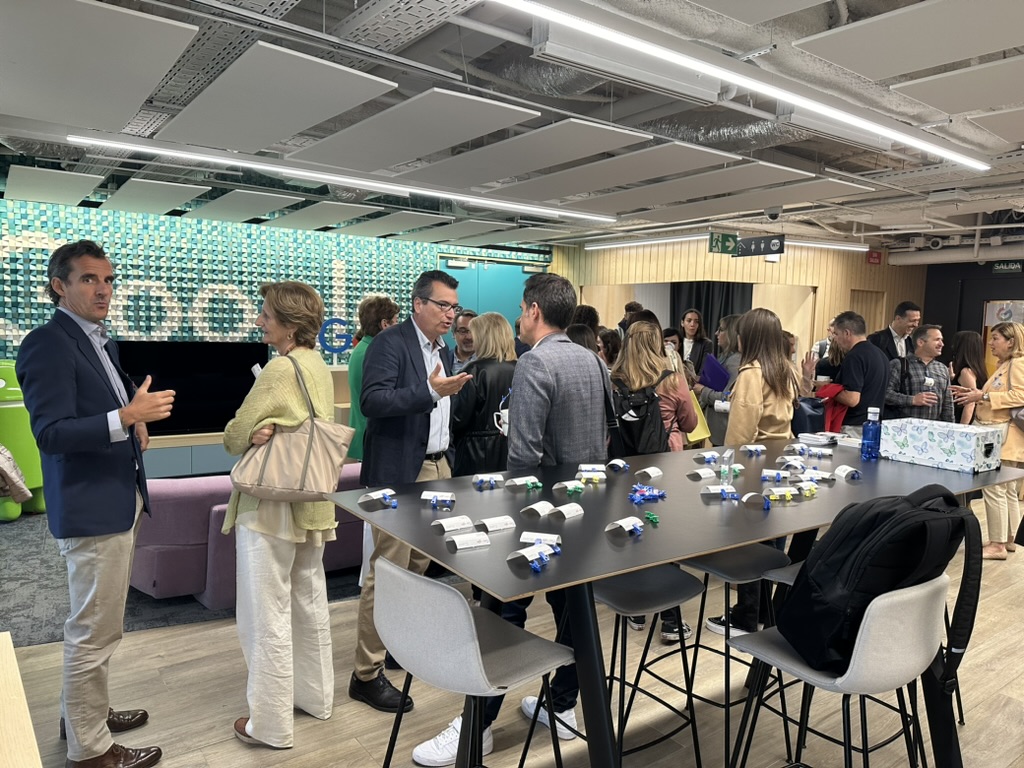
We have joined forces with Google for Education to celebrate the first edition of the conference “Accompanying childhood: Challenges and solutions from the educational community to develop THEIR potential”, a meeting that brought together leading experts in education to analyze the challenges and opportunities that arise when implementing a real and effective personalized education in Spanish classrooms. The meeting was widely attended by heads of educational centers, educators, representatives of family associations and experts.
The need for a comprehensive education
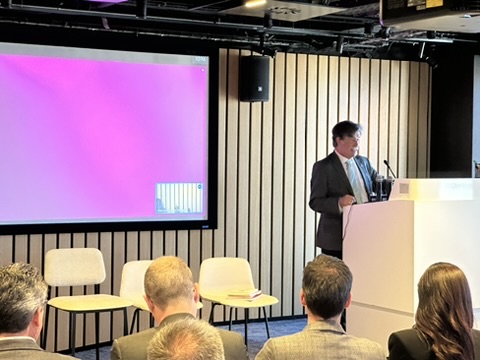
One of the main messages that emerged from the meeting was the need for a comprehensive education that goes beyond academic knowledge. Javier Urra, Doctor in Psychology and Health Sciences, clinical director of RECURRA GINSO and first Child Defender, stressed the importance of educating in values such as sensitivity, humor, empathy and compassion. In this sense, he stressed that we must “take care and worry about how our children, adolescents and young people face life and society. We must analyze what work is possible at the level of training, listening and understanding on the part of the school. What are their problems? What are their challenges? What are their fears? and, of course, what can they contribute? In the age of technology, it is about talking about values, affection and tenderness … in short, about intergenerational respect.”
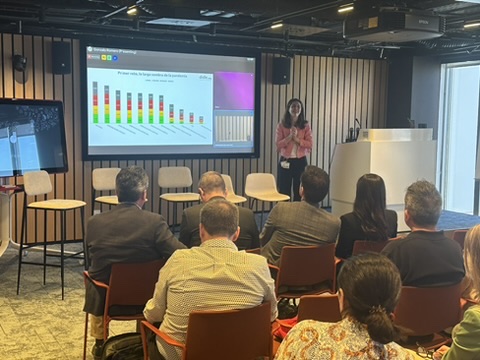
Elena Betés Novoa, CEO of Dide.org, also emphasized these aspects during the opening of the Conference: “School failure is a shared failure as a society, with obvious economic, social and family consequences. Educational diversity is a richness, not a problem. It is necessary that classrooms are prepared to attend to the diversity of students and that inevitably involves their early identification. Only in this way can we ensure that they reach their full potential.” In addition, Betés has analyzed the main problems facing Education using the main indicators measured by the Dide.org tool, highlighting that, since the end of the pandemic, an increase in memory problems and a significant increase in difficulties in learning calculation or writing have been observed in students.
For his part, Martín Varela, Deputy Director of the Trilema Foundation, pointed out during his speech that “each student is unique and learns differently. The school is the place where proposals should be made to promote personalization processes, allowing each learner to develop their maximum potential. For this, it is necessary to use all available resources in terms of organization, proposals, teaching methods, materials or technological tools, etc…. Every student has the right to achieve educational excellence. It is necessary to change our perspective towards an enabling and non-limiting perspective”. For Martín, the key lies in knowing the students well through the use of technological tools.
Panel of experts
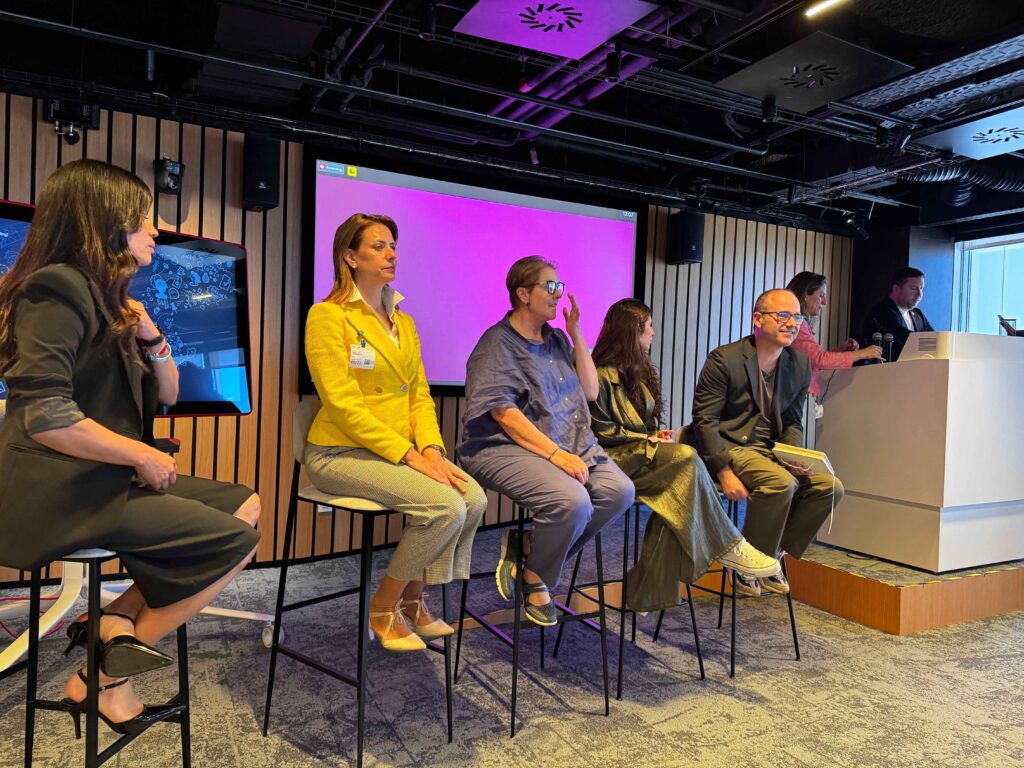
In the final panel discussion, the fundamental role of emotions in learning and the importance of the family were highlighted. “The focus is being placed on performance, and emotional and values education is not being worked on”, said Hilario Blasco, child and adolescent psychiatrist and Medical Director of Emooti. “The emotional would be the first subject, it is the most important tool we have”, added Nuria Ros, Doctor in Psychology at Dide.org.
Paola de la Cruz, pedagogical director of the DinoSchool Crianza Respetuosa centers, addressed the teachers to encourage them to be aware of what the students need, to review “how we accompany them”.
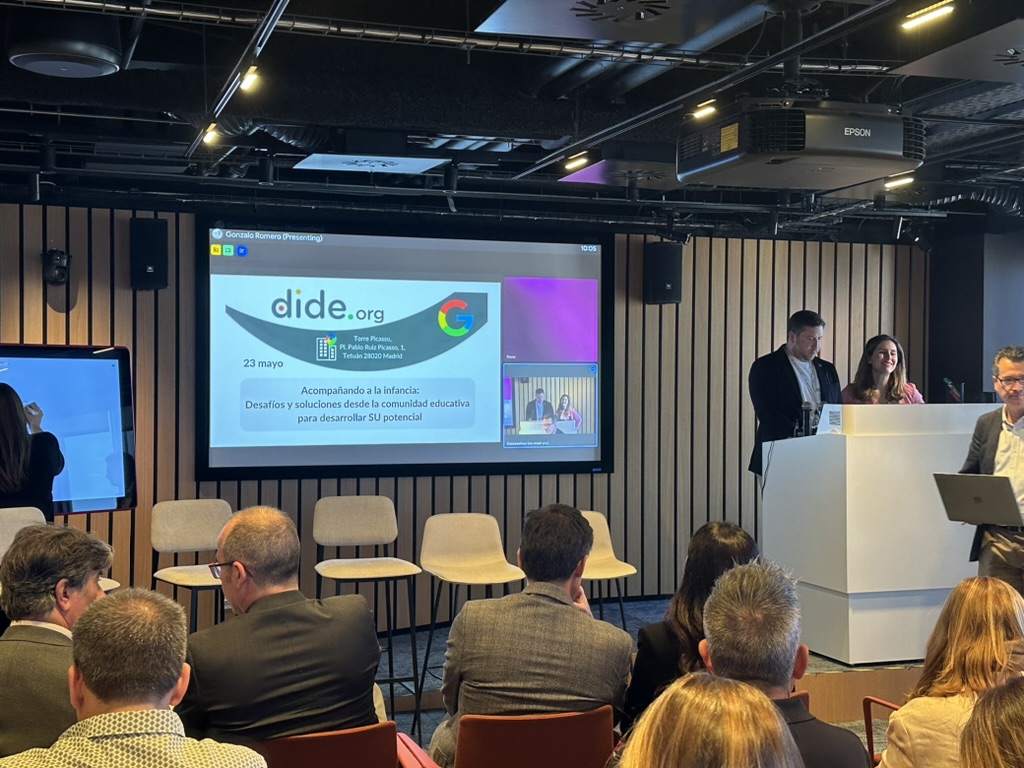
For his part, Gonzalo Romero, director of Google for Education in Spain, said during the closing of the meeting that “technology offers us possibilities that were unimaginable a few years ago. It is our responsibility to take advantage of them to help teachers personalize learning, create digital, safe and inclusive learning environments, and promote a fluid relationship between all members of the educational community. We want to be in the debate on the management of screens and accompany families to protect minors.”
Main conclusions and proposals
The experts participating in the conference agreed on the importance of moving towards a personalized educational model adapted to the needs, capacities and potential of each child. To do this, it is necessary to:
- Unite and commit as an educational community to this objective.
- Protect the emotional well-being of the minor as a determining factor in their academic development.
- Use technology to personalize learning and adapt content to the needs of each student.
- Provide educators with specific training to manage diversity in the classroom.
- Promote collaboration between teachers to share experiences and good practices.
- Promote the involvement of families in the educational process.
To delve into the details of the conference, you can access the full video https://youtu.be/lx_p6PPEPF8
